Convert Uploaded File to Base64 in Js
Uploading files using Base64 encoding is a mutual do, the usage of the technique has been increased since React and Vue.js like frameworks gained popularity.
In this guide I'm going to prove you how to upload files using base64 encoding
What'southward Base64 Encoding?
Base64 is a encoding algorithm that allows you to transform whatever characters into an alphabet which consists of Latin messages, digits, plus, and slash. You tin convert images into a "readable" string, which can exist saved or transferred anywhere.
To sympathise it better I recommend you to take a await at that wonderful article from base64.guru and What is Base64 Encoding by Akshay Kumar
What's Data URI?
We can't only transport the Base64 string to our server and process information technology, what makes it different than any other string? How practice you lot know the file is a epitome or PDF file? That's where Data URI comes in.
Information URI or Data URL is a format that nosotros tin can utilise some data as an inline string. In order to process our Base64 data in server we demand to know the mime type (which can be tricked), which Data URI format provides this.
This is the Information URI or Information URL format:
data:[<mime type>][;charset=<charset>][;base64],<encoded data> For instance this a Base64 string wrapped as a Data URI:
<img src="data:image/jpeg;base64,/9j/4AAQSkZJRgABAQAAAQABAAD/2wCEAAoHCBUWFRgVFRYZGRgZHBgYGBwYGhgYGBoYGBgaGhoZGBgcIS4lHB4rIRgYJjgmKy8xNTU1GiQ7QDs0Py40NTEBDAwMEA8QHBISGjQh...3000 more characters" /> The output:

Final Result
Y'all can take a look at this sandbox for the concluding event for front-cease:
Create your HTML Class
Permit'due south create a very simple grade, we are going to handle it with Javascript
<class id="formcarryForm"> <label for="nameInput">Name</characterization> <input blazon="text" id="nameInput" /> <label for="messageInput">Message</characterization> <textarea id="messageInput" cols="xxx" rows="2"></textarea> <input type="file" id="pictureInput" /> <push type="submit">Submit</button> </class> Add together your Javascript code
In society to upload files as Base64, we need to mind the change event of our file input, and the procedure is async then we need to hold some state to determinate whether we can submit the form or not.
Allow'southward start with our file input.
const fileInput = document.getElementById('pictureInput') // This is for storing the base64 strings let myFiles = {} // if you expect files by default, make this disabled // we will wait until the last file beingness processed let isFilesReady = true fileInput.addEventListener('change', async (event) => { const files = event.srcElement.files; panel.log(files) }) We are going to use isFilesReady afterwards to check if the async process has been completed or not, it'due south true by default because there are no files in the input when the page loads, if yous desire to go far required you can change it to isFilesReady = false
Let'southward try what happens:
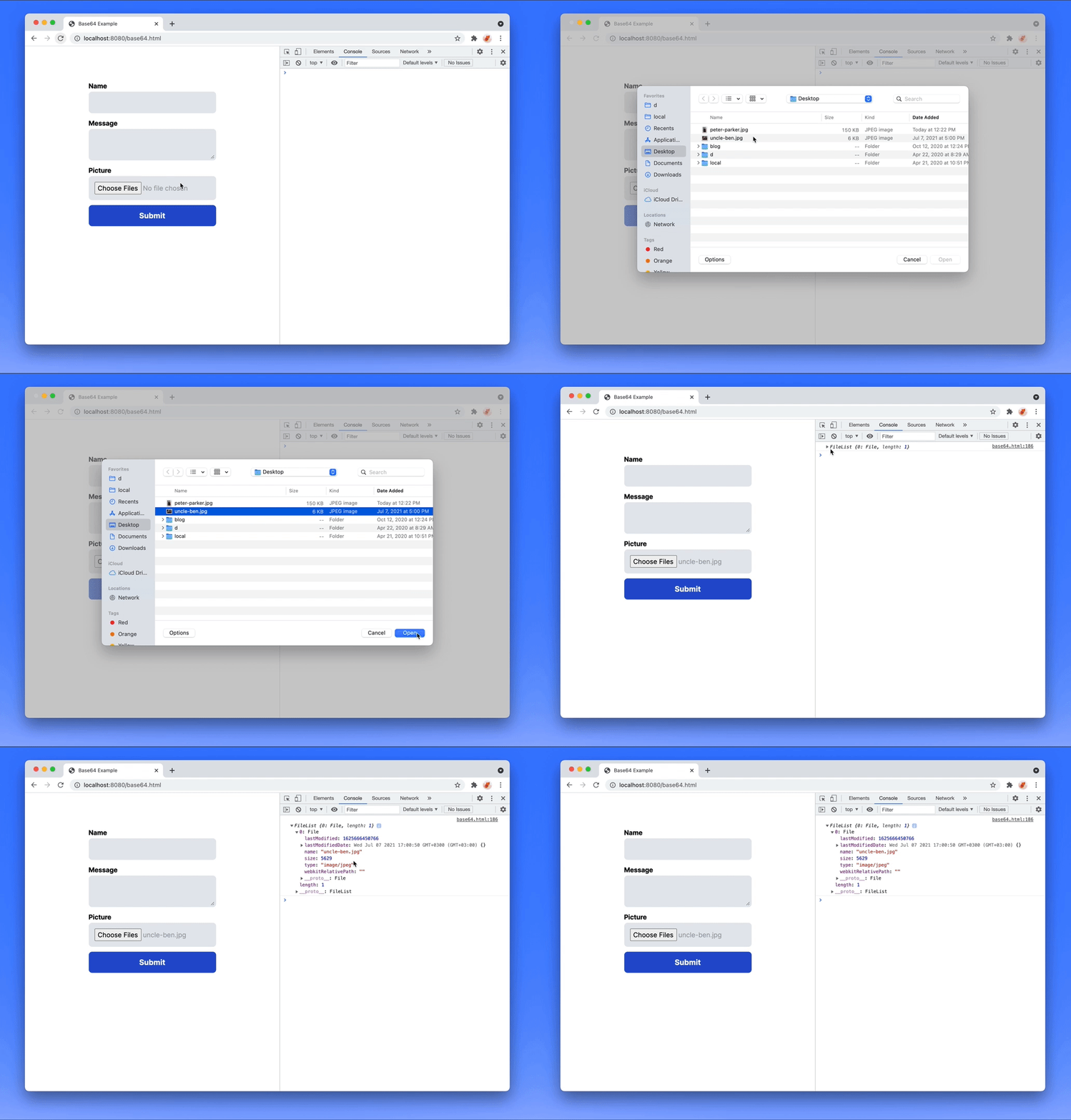
Equally yous can see, nosotros can access our files, now it'due south time for the fun part.
Converting input file to base64 string
We are going to use native FileReader API to read files from the input
fileInput.addEventListener('alter', async (event) => { // clean up primeval items myFiles = {} // prepare land of files to faux until each of them is processed isFilesReady = false const files = event.srcElement.files; const filePromises = Object.entries(files).map(item => { render new Hope((resolve, reject) => { const [alphabetize, file] = item const reader = new FileReader(); reader.readAsBinaryString(file); reader.onload = office(event) { // handle reader success resolve() }; reader.onerror = office() { console.log("couldn't read the file"); reject() }; }) }) Promise.all(filePromises) .then(() => { // if each file processed successfuly and so set up our land to true isFilesReady = true }) .catch((error) => { console.log(error) console.log('something wrong happened') }) }) Now we tin can admission FileReader data using event.target.outcome only we need to transform it to Base64 string, let's exercise that:
fileInput.addEventListener('change', async (event) => { // clean up earliest files myFiles = {} // set state of files to false until each of them is processed isFilesReady = false const files = event.srcElement.files; const filePromises = Object.entries(files).map(item => { return new Promise((resolve, turn down) => { const [index, file] = item const reader = new FileReader(); reader.readAsBinaryString(file); reader.onload = part(result) { // Convert file to Base64 string // btoa is built int javascript function for base64 encoding myFiles['film'] = btoa(upshot.target.result) resolve() }; reader.onerror = function() { console.log("can't read the file"); reject() }; }) }) Promise.all(filePromises) .so(() => { panel.log('set to submit') isFilesReady = truthful }) .take hold of((error) => { panel.log(mistake) console.log('something incorrect happened') }) }) So now we have converted our file to Base64 string and pushed information technology within the myFiles object. every time our input get changes, myFiles is going to erase all the data information technology holds and will procedure everything again.
Converting files to Data URI
We take converted our files to Base64 cord simply that'due south not plenty to upload files, we need to convert information technology to Data URI, it should look like this;
data:image/jpeg;base64,/9j/4AAQSkZJRgABAQAAAQABAAD/2wCEAAoHCBUWFRgVFRYZGRgZHBgYGBwYGhgYGBoYGBgaGhoZGBgcIS4lHB4rIRgYJjgmKy8xNTU1GiQ7QDs0Py40NTEBDAwMEA8QHBISGjQh...3000 more characters The format is;
data:[<mime type>][;charset=<charset>][;base64],<encoded data> Fortunately, we can access the MimeType, so that'due south going to exist easy like that:
// Convert Base64 to data URI // Assign it to your object myFiles['movie'] = `data:${file.type};base64,${btoa(consequence.target.result)}` So at present information technology's ready to upload. But allow's make some tweaks before we go on.
I have named our file input as moving-picture show for the instance, allow'southward make our lawmaking dynamic so it can get the file input name aspect
// this is to get the input name attribute, in our case it volition yield as "motion-picture show" // I'm doing this because I want y'all to use this lawmaking dynamically // so if you change the input name, the result also going to outcome const inputKey = fileInput.getAttribute('name') and then modify this;
myFiles[inputKey] = `data:${file.blazon};base64,${btoa(event.target.issue)}` that fashion if yous change your input name to resume it volition yield as myFiles['resume']
Converting multiple files to base64 at once
Let's comprehend our lawmaking so it can back up multiple file input;
<input type="file" id="pictureInput" multiple/> So in that case, we want to cheque if input has single or multiple files, if information technology has single file nosotros want to name it right according to input name, in our example information technology would be movie only if it has more than than one file, we are going to proper noun with file lengths such as picture[0], picture[1]
here's the code:
+ // if it's multiple upload field then set the object cardinal equally moving picture[0], pic[one] + // otherwise just utilize picture show + const fileKey = `${inputKey}${files.length > 1 ? `[${alphabetize}]` : ''}` + // Catechumen Base64 to data URI + // Assign information technology to your object - myFiles[inputKey] = `information:${file.type};base64,${btoa(consequence.target.result)}` + myFiles[fileKey] = `data:${file.type};base64,${btoa(event.target.result)}` Handle the form submit event
Let's cover our course submit result, what we want to do in that case is we will cheque if the files are ready, if they're not nosotros are going to show an alert to user
const formElement = certificate.getElementById('formcarryForm') const handleForm = async (effect) => { event.preventDefault(); if(!isFilesReady){ alert('files still getting processed') } } formElement.addEventListener('submit', handleForm) All of the lawmaking nosotros wrote so far should expect like this;
const fileInput = document.getElementById('pictureInput') // This is for storing the base64 strings let myFiles = {} // if you wait files by default, make this disabled // we volition await until the last file beingness processed permit isFilesReady = truthful fileInput.addEventListener('change', async (issue) => { // clean upwardly primeval items myFiles = {} // prepare state of files to false until each of them is processed isFilesReady = false // this is to get the input proper name attribute, in our example it volition yield as "picture show" // I'm doing this considering I want you to use this code dynamically // so if you change the input proper name, the result likewise going to effect const inputKey = fileInput.getAttribute('name') var files = event.srcElement.files; const filePromises = Object.entries(files).map(item => { return new Hope((resolve, refuse) => { const [index, file] = item const reader = new FileReader(); reader.readAsBinaryString(file); reader.onload = function(event) { // if it'due south multiple upload field and then gear up the object key as picture[0], picture[1] // otherwise but apply picture const fileKey = `${inputKey}${files.length > ane ? `[${index}]` : ''}` // Convert Base64 to information URI // Assign it to your object myFiles[fileKey] = `information:${file.type};base64,${btoa(consequence.target.issue)}` resolve() }; reader.onerror = function() { console.log("can't read the file"); reject() }; }) }) Promise.all(filePromises) .then(() => { console.log('ready to submit') isFilesReady = true }) .catch((mistake) => { console.log(error) console.log('something wrong happened') }) }) const formElement = certificate.getElementById('formcarryForm') const handleForm = async (upshot) => { event.preventDefault(); if(!isFilesReady){ panel.log('files all the same getting candy') return } } formElement.addEventListener('submit', handleForm) Let's create an object of our form values in the form submit upshot;
const formElement = certificate.getElementById('formcarryForm') const handleForm = async (effect) => { event.preventDefault(); if(!isFilesReady){ console.log('files still getting processed') render } const formData = new FormData(formElement) // get proper name and message input from our <form> element let information = { 'proper noun': formData.get('name'), 'bulletin': formData.get('bulletin') } // iterate over the base64 files we've converted Object.entries(myFiles).map(item => { // destruct the file const [key, file] = item // append it to our data object data[key] = file }) console.log(data) } formElement.addEventListener('submit', handleForm) Let'due south try it out:
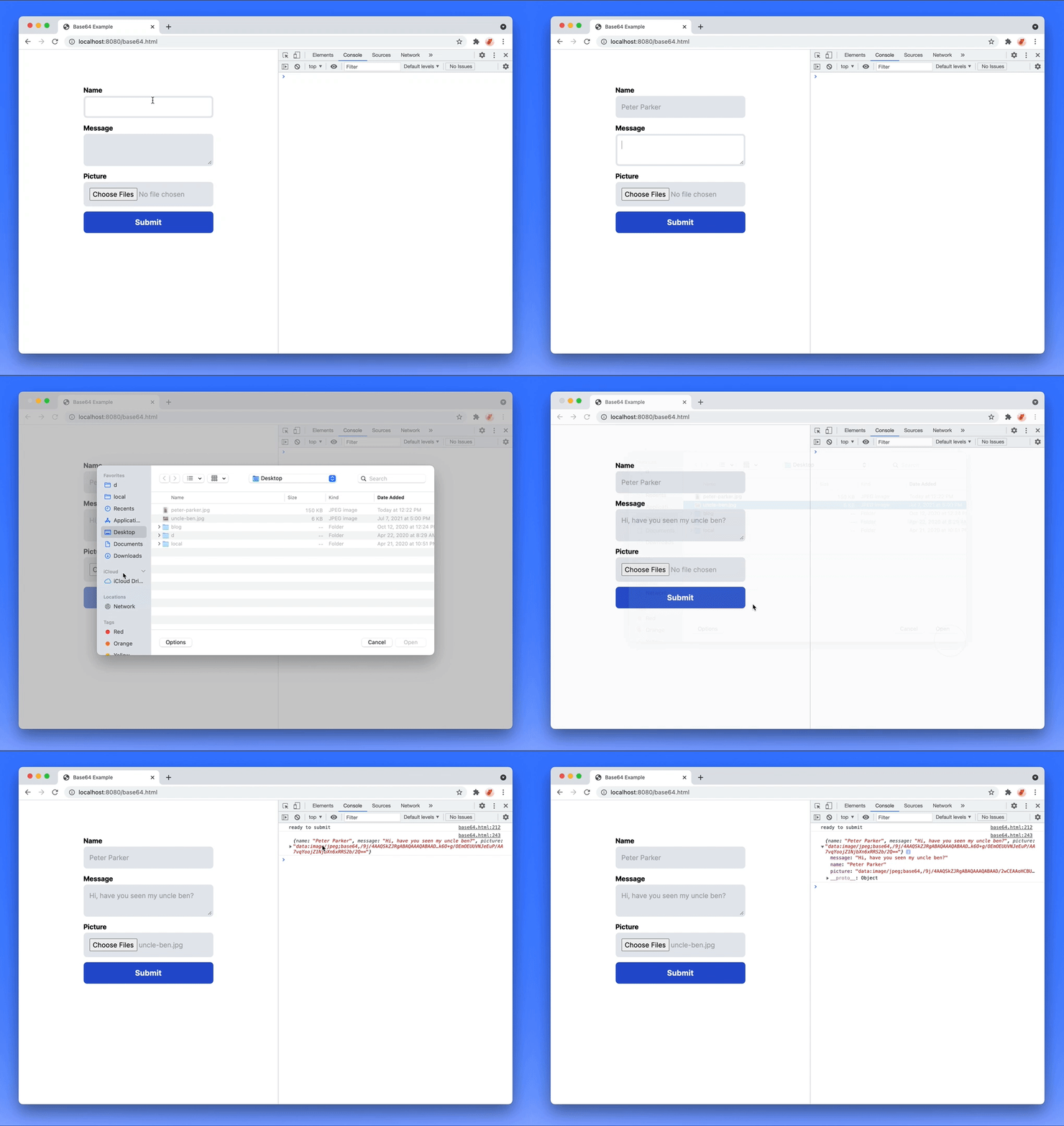
What's next?
Nosotros've washed all the necessary stuff on the front end-finish except network request part.
At formcarry we permit our customers to upload files as Base64 (pro characteristic).
You tin either use our service to handle your form, or y'all can write a server lawmaking to process Base64 Data URI.
Luckily for you, I'm going to encompass both of them.
i.1- Uploading Base64 to formcarry
Now we can transport our data to formcarry, the important thing in this step is converting our object to JSON and setting the Content Type as application/json.
const handleForm = async (consequence) => { event.preventDefault(); if(!isFilesReady){ console.log('files notwithstanding getting candy') return } const formData = new FormData(formElement) let information = { 'proper noun': formData.go('proper name'), 'bulletin': formData.get('bulletin') } Object.entries(myFiles).map(detail => { const [fundamental, file] = item // append the file to information object information[key] = file }) fetch('https://formcarry.com/s/{Your-Unique-Endpoint}', { method: 'POST', trunk: JSON.stringify(information), headers: { 'Content-Type': 'awarding/json', Accept: 'application/json' } }) // convert response to json .so(r => r.json()) .and then(res => { panel.log(res); }); } Modifyhttps://formcarry.com/s/{Your-Unique-Endpoint} with your unique class ID
i.2- Endeavour it out
Submit your course by filling out all of the fields, then refresh your dashboard
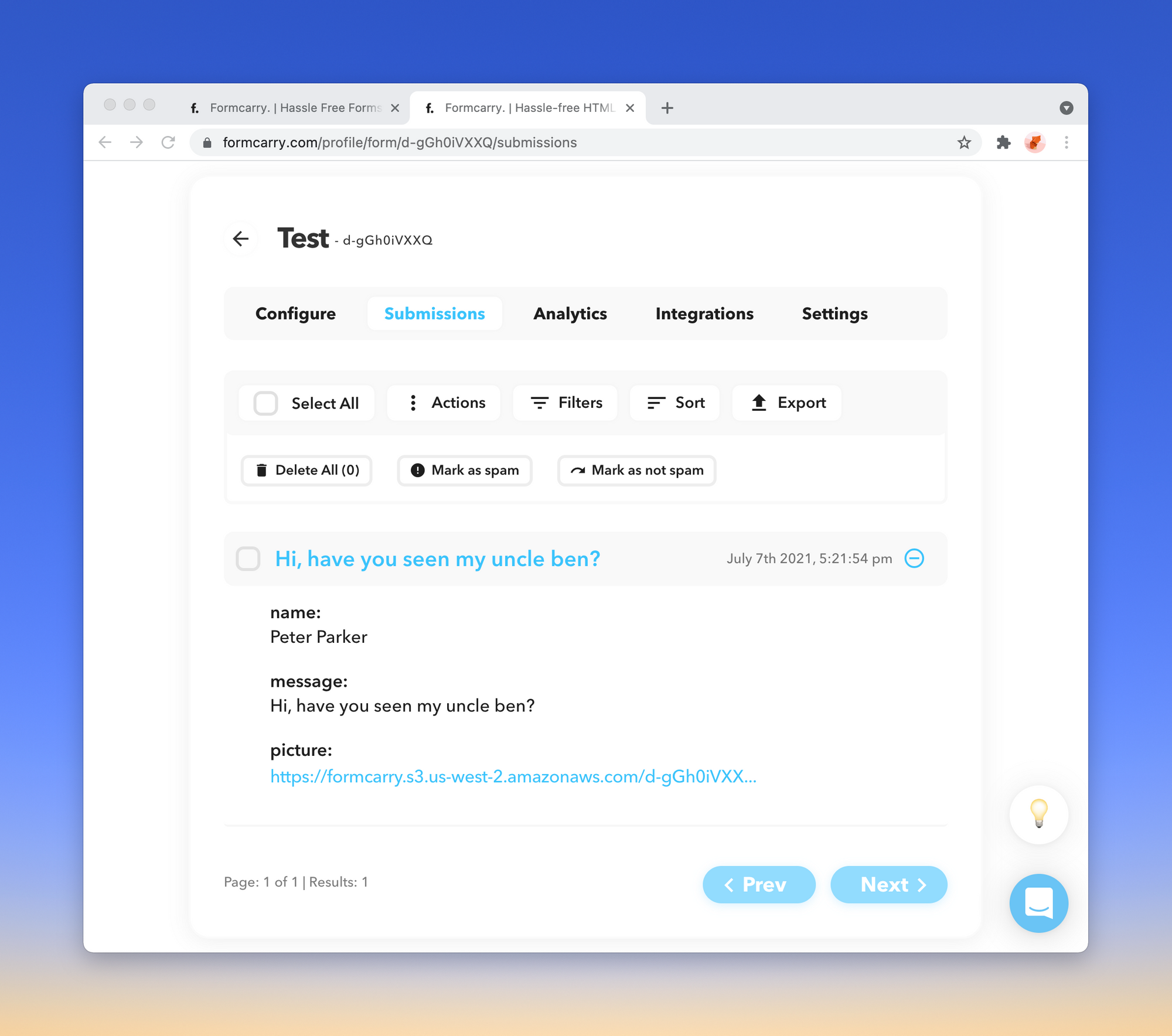
Formcarry will automagically convert your base64 to download-ready file.
two- Uploading Base64 to NodeJS
I'm going to use Express.js for our example, let's create an express app using express-generator
$ npx express-generator Approximately Base64 files are 33% heavier than the original file, you lot might want to keep that in mind.
At present, let'due south allow our server to procedure large body data past getting into the app.js and change:
-app.use(express.json()); -app.apply(express.urlencoded({ extended: fake })); +app.utilise(express.json({limit: '50mb'})); +app.use(express.urlencoded({ extended: true, limit: '50mb' })); Also nosotros demand to enable CORS to perform request from our front-end app:
npm i --relieve cors Enable information technology like this:
var express = require('express'); var ba64 = require('ba64') var cors = require('cors') var app = express(); app.utilize(cors()); I'1000 going to remove all the unnecessary stuff, you can supercede this with your app.js:
var createError = require('http-errors'); var limited = crave('limited'); var path = require('path'); var cors = crave('cors') var app = express(); app.use(cors()); app.utilize(express.json({limit: '50mb'})); app.utilize(limited.urlencoded({ extended: true, limit: '50mb' })); app.use(express.static(path.join(__dirname, 'public'))); // catch 404 and forrad to error handler app.use(function(req, res, next) { next(createError(404)); }); // error handler app.utilise(office(err, req, res, side by side) { // gear up locals, only providing error in development res.locals.bulletin = err.message; res.locals.mistake = req.app.become('env') === 'development' ? err : {}; // render the fault folio res.status(err.condition || 500); res.render('fault'); }); module.exports = app; ii.one- Creating our process road
Now we need to create a Express route to process our form information.
But first we are going to utilise a tiny parcel called ba64 which volition assist u.s.a. to save base64 images to our disk.
The flow should be like this;
- Bank check the central is a valid Data URI
- If it's valid extract the Base64 string from Data URI
- Extract the mimetype from Information URI
- Save to the deejay
That's where ba64 packet comes in, it volition automatically extract Base64 string from Data URI, and append the file extension after the file name automatically.
npm i --save ba64 Import it in our app.js
var ba64 = require('ba64') Let's create our route, go to app.js and add following:
app.post('/upload', async (req, res, adjacent) => { // exclude name and message for the sake of demo // all other body items will be considered as a file const { name, message, ...files } = req.trunk for(let key in files){ const base64 = files[primal] // check if it'southward correctly formatted Base64 Information URI if(checkBase64(base64)){ // Write it to our root directory using input key equally filename // eg. pic[1] ba64.writeImageSync(primal, base64) } } res.transport({files}) }) function checkBase64(string){ const B64_REGEX = /^information:.*;base64,([0-9a-zA-Z+\\/]{4})*(([0-9a-zA-Z+\\/]{2}==)|([0-9a-zA-Z+\\/]{3}=))?$/i return B64_REGEX.test(string) } Final code should look like:
var createError = require('http-errors'); var limited = crave('express'); var path = require('path'); var ba64 = require('ba64') var cors = require('cors') var app = express(); app.apply(cors()); // view engine setup app.employ(limited.json({limit: '50mb'})); app.apply(limited.urlencoded({ extended: true, limit: '50mb' })); app.use(express.static(path.join(__dirname, 'public'))); app.post('/upload', async (req, res, next) => { // exclude name and message for the sake of demo // all other body items will exist considered as a file const { name, message, ...files } = req.trunk for(allow central in files){ const base64 = files[cardinal] // check if it'due south correctly formatted Base64 Information URI if(checkBase64(base64)){ // Write it to our root directory using input primal equally filename // eg. pic[1] ba64.writeImageSync(key, base64) } } res.send({files}) }) function checkBase64(string){ const B64_REGEX = /^data:.*;base64,([0-9a-zA-Z+\/]{4})*(([0-9a-zA-Z+\/]{2}==)|([0-9a-zA-Z+\/]{3}=))?$/i return B64_REGEX.test(string) } // catch 404 and forward to error handler app.use(role(req, res, next) { next(createError(404)); }); // error handler app.use(office(err, req, res, next) { // set locals, just providing error in development res.locals.message = err.message; res.locals.error = req.app.become('env') === 'development' ? err : {}; // render the error page res.condition(err.status || 500); res.return('error'); }); module.exports = app; At present run the app using:
$ npm start 2.2 - Configure Front end-end
Let's get back to our forepart-end code and point our form to the back-end our server runs at http://localhost:3000 and our road is localhost:3000/upload
const handleForm = async (event) => { event.preventDefault(); if(!isFilesReady){ panel.log('files nonetheless getting processed') render } const formData = new FormData(formElement) allow data = { 'name': formData.get('proper noun'), 'bulletin': formData.get('bulletin') } Object.entries(myFiles).map(item => { const [key, file] = particular // append the file to data object data[fundamental] = file }) fetch('http://localhost:3000/upload', { method: 'Mail', body: JSON.stringify(data), headers: { 'Content-Blazon': 'awarding/json', Accept: 'application/json' } }) // convert response to json .then(r => r.json()) .then(res => { console.log(res); }); } Let'southward endeavor it:
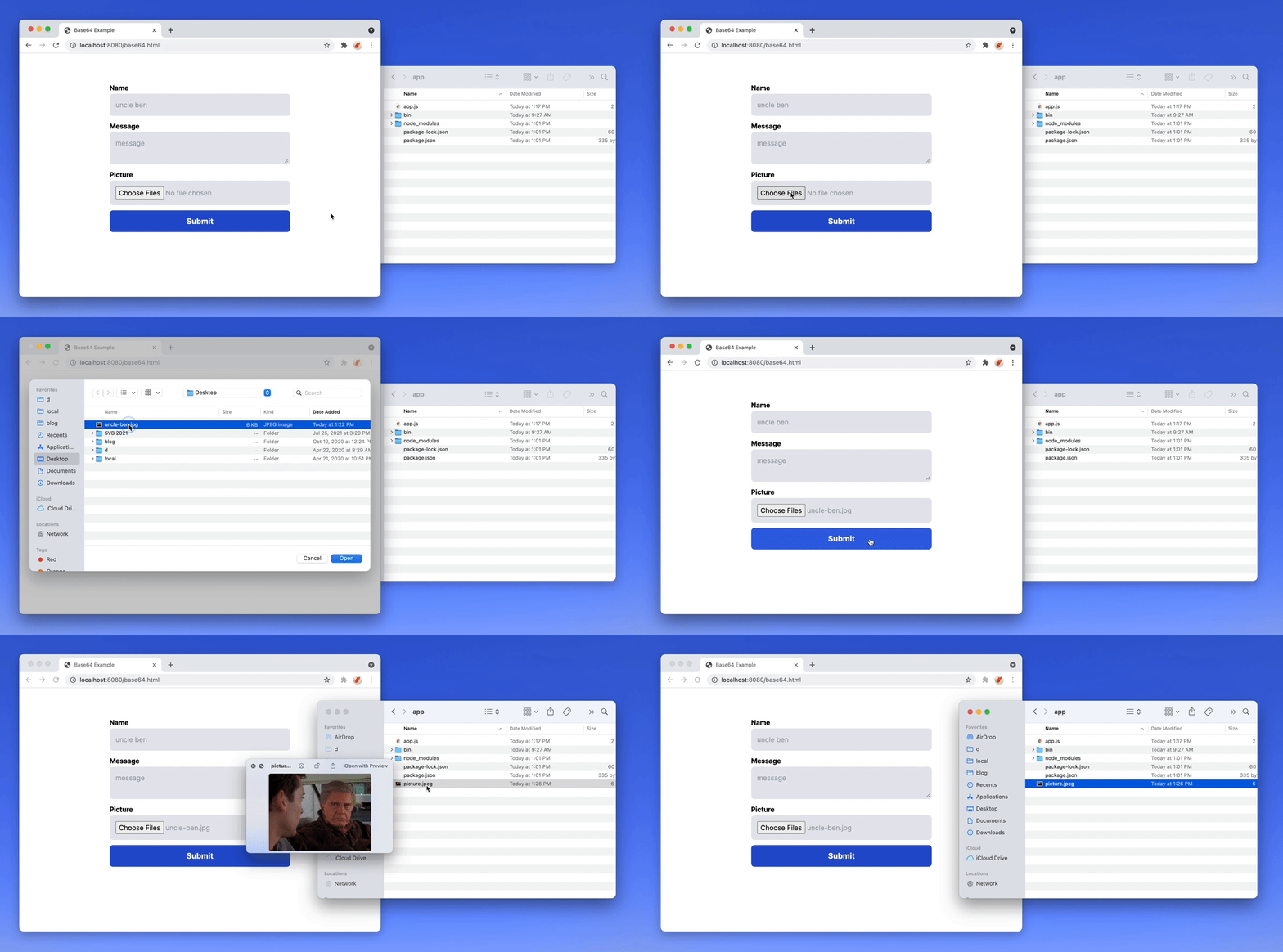
It works!
Decision
Thanks for following the weblog post to the end, base64 is a catchy issue that'south why I wanted to prepare an end-to-terminate fully functional tutorial.
I hope information technology's benign for you lot, if you lot have whatever questions just leave a comment and I'll effort my best.
If yous desire to support us, simply take a look at our service formcarry for a hassle gratis course handling.
Source: https://formcarry.com/blog/how-to-upload-files-as-base64/
0 Response to "Convert Uploaded File to Base64 in Js"
Post a Comment